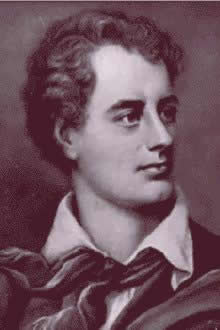
Джордж Гордон Байрон

Английская поэзия · XIX век

Джордж Гордон Байрон

George Gordon Noel Byron

  • 1788 — 1824
  • 12 стихотворений
  • Переводы: Яков Фельдман

Содержание

Перевод · оригинал

  1. Нам больше не скитатьсяSo we’ll go no more a-roving
  2. Мне сегодня тридцатьGROWING OLD
  3. Мы расстались в слезах, ты была холоднаWhen we two parted
  4. ЭЛЕГИЯO, snatched away in beauty’s bloom
  5. И смерть не разрежет на частиTo D
  6. Чары пали, открыв, как отлива водаThe spell is broke, the charm is flown
  7. В альбом, на МальтеLines written in an album, at Malta
  8. ПрощайFarewell! If ever fondest prayer
  9. Расставаясь с Ньюстедским АббатствомON LEAVING NEWSTEAD ABBEY
  10. Эпитафия для Вильяма ПиттаEpitaph for William Pitt
  11. Царь - певцуMy Soul Is Dark
  12. Падение СеннахерибаTHE DESTRUCTION OF SENNACHERIB
Как читать

Нам больше не скитаться

So we’ll go no more a-roving

Оригинал

SO we'll go no more a-roving So late into the night, Though the heart still be as loving, And the moon still be as bright.

For the sword outwears its sheath, And the soul outwears the breast, And the heart must pause to breathe, And love itself have rest.

Though the night was made for loving, And the day returns too soon, Yet we'll go no more a-roving By the light of the moon.

Перевод

Нам больше не скитаться Так поздно по ночам, Луны не улыбаться Сияющим очам.

Мечом истерты ножны, Душой истерта грудь. И вот что сделать нужно - Немного отдохнуть.

И ночь - пора любовная, А день развеет сны. Но не скитаться больше нам В сиянии луны.

Перевод: Яков Фельдман

Мне сегодня тридцать

GROWING OLD

Оригинал

But now at thirty years my hair is grey-- (I wonder what it will be like at forty? I thought of a peruke the other day--) My heart is not much greener; and, in short, I Have squandered my whole summer while 'twas May, And feel no more the spirit to retort; I Have spent my life, both interest and principal, And deem not, what I deemed, my soul invincible. No more--no more--Oh! never more on me The freshness of the heart can fall like dew, Which out of all the lovely things we see Extracts emotions beautiful and new; Hived in our bosoms like the bag o' the bee. Think'st thou the honey with those objects grew? Alas! 'twas not in them, but in thy power To double even the sweetness of the flower. No more--no more--Oh! never more, my heart, Canst thou be my sole world, my universe! Once in all, but now a thing apart, Thou canst not be my blessing or my curse: The illusion's gone for ever, and thou art Insensible, I trust, but none the worse, And in thy stead I've got a deal of judgement, Though Heaven knows how it ever found a lodgement. My days of love are over; me no more The charms of maid, wife, and still less widow, Can make the fool of which they made before,-- In short, I must not lead the life I did do; The credulous hope of mutual minds is o'er, The copious use of claret is forbid too, So for a good old-gentlemanly vice, I think I must take up with avarice. Ambition was my idol, which was broken Before the shrines of Sorrow, and of Pleasure; And the two last have left me many a token O'er which reflection may be made at leisure: Now, like Friar Bacon's Brazen Head, I've spoken, 'Time is, Time was, Time's past': a chymic treasure Is glittering Youth, which I have spent betimes-- My heart in passion, and my head on rhymes. What is the end of Fame? 'tis but to fill A certain portion of uncertain paper: Some liken it to climbing up a hill, Whose summit, like all hills, is lost in vapour; For this men write, speak, preach, and heroes kill, And bards burn what they call their 'midnight taper', To have, when the original is dust, A name, a wretched picture and worse bust. What are the hopes of man? Old Egypt's King Cheops erected the first Pyramid And largest, thinking it was just the thing To keep his memory whole, and mummy hid; But somebody or other rummaging Burglariously broke his coffin's lid: Let not a monument give you or me hopes, Since not a pinch of dust remains of Cheops. But I, being fond of true philosophy, Say very often to myself, 'Alas! All things that have been born were born to die, And flesh (which Death mows down to hay) is grass; You've passed your youth not so unpleasantly, And if you had it o'er again--'twould pass-- So thank your stars that matters are not worse, And read your Bible, sir, and mind your purse.'
Перевод

Мне сегодня тридцать и я седой - что же будет в сорок? Полысею? Куплю парик... но и сердце вянет. Я пропил свое лето в Мае – капитал и проценты. Я считался непобедимым - но это в прошлом.

Никогда не падет на сердце росою свежесть, Под лучом красоты не исторгнется каплей меда. Не в цветах сладость, а в нашем взоре.

Никогда ты не будешь моим миром, Всей Вселенной, ни радостью, ни проклятьем. Ты меня осудила, нашла мне место.

Ах, прощайте, девушки, жены, вдовы! Поменяю жизнь -позабуду жадность, И бордового цвета не надо больше.

Я молился Амбиций Идолу, но я разбил его Пред Святыней Удовольствия и Печали. И скажу, как Медный Монах у Бэкона: "Время было и время сплыло". Сиянье юности Я истратил - на страсти сердце и мозг на рифмы.

Чем кончается слава? Исчеркана вся бумага. Я взбираюсь в гору - вершина ее в тумане. Люди молятся, беседуют, убивают, А поэт сжигает ночную свечку, Дабы сделать с этого жалкий слепок.

Сколько стоит надежда? Хеопс Египетский Повелел воздвигнуть себе гробницу - Сохранить там тело и людям память. Но пришли грабители, вскрыли крышку... Монументы, увы, ничего не значат - Остается от каждого кучка пепла.

Смерть косит нас, как травы. Ты был юн. Благодари звезду - могло быть хуже. Читай свое Священное Писание И береги свой личный кошелек.

Перевод: Яков Фельдман

Мы расстались в слезах, ты была холодна

When we two parted

Оригинал

In silence and tears,

Half broken-hearted

To sever for years,

Pale grew thy cheek and cold,

Colder thy kiss;

Truly that hour foretold

Sorrow to this.

The dew of the morning

Sunk chill on my brow--

It felt like the warning

Of what I feel now.

Thy vows are all broken,

And light is thy fame;

I hear thy name spoken,

And share in its shame.

They name thee before me,

A knell to mine ear;

A shudder comes o'er me--

Why wert thou so dear?

They know not I knew thee,

Who knew thee too well:--

Long, long shall I rue thee,

Too deeply to tell.

In secret we met--

In silence I grieve

That thy heart could forget,

Thy spirit deceive.

If I should meet thee

After long years,

How should I greet thee?--

With silence and tears.

Перевод

Мы расстались в слезах, ты была холодна И бледна, и губы как лед. И я понял, что я заплачу сполна За этот несладкий мед.

И капли росы холодили бровь, И клятв застывал сургуч. И я подумал, что эту любовь Запереть, и выбросить ключ.

А теперь твоя слава из уст в уста Спотыкается, а бежит. И я не хотел бы тебе мешать, И грустно мне с этим жить.

И имя твое, как стеклянный шар, Звенит у меня в ушах. И хотя мне тебя действительно жаль, Я не буду тебе мешать.

Перевод: Яков Фельдман

ЭЛЕГИЯ

O, snatched away in beauty’s bloom

Оригинал

Elegy

O, snatch'd away in beauty’s bloom! On thee shall press noo ponderous tomb; But on thy turf shall roses rear Their leaves, the earliest of the year, And the wild cypress wave in tender gloom.

And oft by yon blue gushing stream Shall Sorrow lean her drooping head, And feed deep thought with many a dream, And lingering pause and lightly tread; Fond wretch! as if her step disturb'd the dead!

Away! we know that tears are vain, That Death nor heeds nor hears distress: Will this unteach us to complain? Or make one mourner weep the less? And thou, who tell'st me to forget, Thy looks are wan, thine eyes are wet.

Перевод

В цветеньи - смерть. Зачем гранита тяжесть Тебе на грудь? Земли, травы простой... Но - чтоб бутоны раннею весной И кипарис - полночной стражей.

Журчит ручей, по камешкам спеша, Журчит, на голос твой похожий... Здесь даже Жалость сдерживает шаг, Чтобы умерших не тревожить.

Не так легко со Смертью объясниться, Она глуха, не слышит что к чему... Твой тихий голос, шепчущий во тьму. И взгляд. И мокрые ресницы.

Перевод: Яков Фельдман

И смерть не разрежет на части

To D

Оригинал

In thee I fondly hoped to clasp A friend whom death alone could sever; Till envy, with malignant grasp, Detach'd thee from my breast for ever. True, she has forced thee from my breast, Yet in my heart thou keep'st thy seat; There, there thine image still must rest, Until that heart shall cease to beat. And when the grave restored her dead, When life again to dust is given, On thy dear breast I'll lay my head-- Without thee where would be my heaven?

Перевод

И смерть не разрежет на части Монету - на реверс и аверс. Я был бы с тобою счастлив - Когда б не людская зависть. Она оторвала тебя от моей груди. Но в сердце своём я место тебе держу. Покуда оно дрожит, дребезжит, гудит, Я нашим с тобой пережитым дорожу. И когда могилы выпустят мертвецов И новой жизнью наполнится старый прах, Я буду с тобою счастлив в конце концов И улыбка будет блуждать на моих губах.

Чары пали, открыв, как отлива вода

The spell is broke, the charm is flown

Оригинал

The spell is broke, the charm is flown! Thus is with life’s fitful fever: We madly smile when we should groan; Delirium is our best deceiver.

Each lucid interval of thought Recalls the woes of Nature’s charter; And he that acts as wise men ought, But lives, as saints have died, a martyr.

Перевод

Чары пали, открыв, как отлива вода, Лихорадочной жизни унылое кредо. Мы безумно хохочем, где впору рыдать, Среди бед и забот утешаемся бредом

Понимаем природы суровый закон, Принимаем её справедливую кару, И мечтаем пополнить собой Пантеон, К роковому кресту пригласив адвоката!

Перевод: Яков Фельдман

В альбом, на Мальте

Lines written in an album, at Malta

Оригинал

As o’er the cold sepulcher stone Some name arrests the passer-by; Thus, when thou view’st this page alone, May mine attract thy pensive eye! And when by thee that name is read, Perchance in some succeeding year, Reflect on me as on the dead, And think my Heart is buried here.

Перевод

Заброшенных могил холодный камень. Идет прохожий, видит имена. А ты сидел над этими листами И наконец добрался до меня. Ты их листал так много лет Но лишь сегодня пригляделся. Увы, Поэта больше нет, Но здесь его осталось Сердце!

Другие переводы →

Прощай

Farewell! If ever fondest prayer

Оригинал

Farewell! If ever fondest prayer For other’s weal avail’d on high, Mine will not all be lost in air, But waft thy name beyond the sky. ’T were vain to speak, to weep, to sigh: Oh! More than tears of blood can tell, When wrung from guilt’s expiring eye, Are in that word – Farewell! – farewell!

These lips are mute, these eyes are dry; But in my breast and in my brain, Awake the pangs that pas not by, The sought that ne’er shall sleep again. My soul nor deigns nor dares complain, Though grief and passion there rebel; I only know we loved in vain - I only feel – Farewell! – Farewell!

Перевод

Прощай! Я достоверно знаю, Что на высокой высоте Не пропадет в небесной дали Моя молитва о тебе. И слезы, смешанные с кровью, Не так пронзительно кричат, Как это брошенное слово, Из слов последнее – Прощай!

Глаза сухие, губы – немы. Но грудь и мозг – сплошная боль. Так запланировано небом, Что мы расстанемся с тобой. Но я не жалуюсь нисколько, Хотя мне хочется кричать. Я понимаю – это больно И говорю тебе – прощай.

Другие переводы →

Расставаясь с Ньюстедским Аббатством

ON LEAVING NEWSTEAD ABBEY

Оригинал

‘Why dost thou build the hall, son of the winged days? Thou lookest from thy tower to-day; yet a few years, and the blast of the desert comes, it howls in thy empty court.’ - Ossian

Through thy battlements, Newstead, the hollow winds whistle; Thou, the hall of my fathers, art gone to decay; In thy once smiling garden, the hemlock and thistle Have choked up the rose which late bloom’d in the way. Of the mail-cover’d Barons, who proudly to battle Led their vassals from Europe to Palestine’s plain, The escutcheon and shield, which with every blast rattle, Are the only sad vestiges now that remain. No more doth old Robert, with harp-stringing numbers, Raise a flame in the breast for the war-laurell’d wreath; Near Askalon’s towers, John of Horistan slumbers, Unnerved is the hand of his minstrel by death. Paul and Hubert, too, sleep in the valley of Cressy; For the safety of Edward and England they fell: My fathers! the tears of your country redress ye; How you fought, how you died, still her annals can tell. On Marston, with Rupert, ‘gainst traitors contending, Four brothers enrich’d with their blood the bleak field; For the rights of a monarch their country defending, Till death their attachment to royalty seal’d. Shades of heroes, farewell! your descendant, departing From the seat of his ancestors, bids you adieu! Abroad, or at home, your remebrance imparting New courage, he’ll think upon glory and you. Though a tear dim his eye at this sad separation, ’Tis nature, not fear, that excites his regret; Far distant he goes, with the same emulation, The fame of his fathers he ne’er can forget. That fame, and that memory, still will he cherish; He vows that he ne’er will disgrace your renown: Like you will he live, or like you will he perish; When decay’d, may he mingle his dust with your own!

Перевод

Через твои ограды ветер свистит пустой. Ньюстед, отцов отрада! Не исчезай, постой! Там где торчали уши баловней и пройдох Позднюю розу глушит ранний чертополох. От удалых баронов, едущих в Палестину - Звонко звенят кольчуги, глухо гудят щиты - Только четыре фрески - выцветшие картины, Да на дорожках в парке я угадал следы. Помнят про вашу храбрость крепости Ашкелона, Помнят про вашу верность Франция и Кресси. Боже, храни же Англию волей ее героев И молодой поэзией память о них спаси! Тени великих предков! Я уезжаю завтра. Ваша живая слава бродит в моей крови. Я ни одной минуты не забываю, правда, Чей я и внук и правнук. Ты, океан, реви! Я уезжаю завтра, чтобы сражаться славно, Чтобы врагам от страха в черной ночи дрожать. Я уезжаю завтра, чтобы погибнуть славно, С вашим великим прахом собственный прах смешать.

Эпитафия для Вильяма Питта

Epitaph for William Pitt

Оригинал

With Death doomed to grapple, Beneath this cold slab, he Wholied in the Chapel, Now lies in the Abbey.

Перевод

Смерть замотал За ним гоняться. В Палате врал, Теперь - в Аббатстве.

Царь - певцу

My Soul Is Dark

Оригинал

My soul is dark – Oh! quickly string The harp I yet can brook to hear; And let thy gentle fingers fling Its melting murmur o’er mine ear. If in this heart a hope be dear, That sound shall charm it forth again: If in these eyes there lurk a tear, ‘Twill flow, and cease to burn my brain. But bid the strain be wild and deep, Nor let thy notes of joy be first: I tell thee, minstrel, I must weep, Or else this heavy heart will burst; For it had been by sorrow nursed, And ached in sleepless silence long; And now ‘tis doomed to know the worst, And break at once – or yield to song

Перевод

Душа темна. Но говор струн Еще хотел бы я послушать. Пускай от мягких пальцев звон Сейчас в мои прольется уши. И если есть еще надежда, Чтоб я ее услышать мог. И слезы пусть текут, конечно, Чтоб остудить горячий мозг. Играй пронзительно, глубоко, Не забавляй и не хитри. Играй, певец! Я должен плакать, Чтобы не лопнуть изнутри. Я молча жил, глотая вести, И жду что будет впереди. Давай, певец, поплачем вместе. А нет - так лучше уходи!

Другие переводы →

Падение Сеннахериба

THE DESTRUCTION OF SENNACHERIB

Оригинал

The Assyrian came down like the wolf on the fold, And his cohorts were gleaming in purple and gold; And the sheen of their spears was like stars on the sea, When the blue wave rolls nightly on deep Galilee. Like the leaves of the forest when Summer is green, That host with their banners at sunset were seen: Like the leaves of the forest when Autumn hath blown, That host on the morrow lay withered and strown. For the Angel of Death spread his wings on the blast, And breathed in the face of the foe as he passed; And the eyes of the sleepers waxed deadly and chill, And their hearts but once heaved, and for ever grew still! And there lay the steed with his nostril all wide, But through it there rolled not the breath of his pride; And the foam of his gasping lay white on the turf, And cold as the spray of the rock-beating surf. And there lay the rider distorted and pale, With the dew on his brow, and the rust on his mail: And the tents were all silent, the banners alone, The lances unlifted, the trumpet unblown. And the widows of Ashur are loud in their wail, And the idols are broke in the temple of Baal; And the might of the Gentile, unsmote by the sword, Hath melted like snow in the glance of the Lord!

Перевод

Ассирийцы сошли как лавина, как стая волков. Были пурпур и золото в лязге и блеске клыков. Были копья как звезды на небе над синей водой, Когда темною ночью шумит в Галилее прибой. Как зеленые листья в июле в зеленом лесу - Так шумели их флаги вокруг на вечернем ветру. И как мертвые желтые листья лежат в ноябре - Так лежали наутро их флаги на голой земле. Ибо Смерть распростерла над ними два черных крыла. И дохнула им в лица - и лица заволокла. И на хладные веки легла восковая печать. И осклабились рты - и сердца перестали стучать. Вот несчастная лошадь лежит неподвижно, упав. И нейдет из широких ноздрей огнедышащий пар. Только белая пена на землю течет изо рта, Будто пена морская в песок, где прибоя черта. И упал ее всадник в агонии, белый как мел. И в росе его бровь, и кольчуги металл проржавел. И никто не поднимет над войском трепещущий стяг. И никто не трубит - только ветер на белых костях. Как узнают их вдовы - так будут рыдать и вопить, И божков обесчещенных хаять и в речке топить. И рассказывать детям, надев на свечу абажур, Как под Взгядом Господним растаял свирепый Ашшур.

Биография

Lord Byron

1. Где и когда родился? В какой семье?

  • Полное имя: Джордж Гордон Ноэл Байрон, 6-й барон Байрон.
  • Дата рождения: 22 января 1788 года.
  • Место рождения: London.
  • Родился в аристократической, но обедневшей семье.
  • Отец: John Byron — офицер британского флота, известный расточительностью.
  • Мать: Catherine Gordon — наследница старинного шотландского рода.
  • С рождения имел врожденный дефект правой стопы (косолапость), но всю жизнь занимался верховой ездой, плаванием и фехтованием.
  • В 10 лет унаследовал титул лорда.

2. Основные события жизни

  • 1788 — рождение в Лондоне.
  • Учился в Trinity College, Cambridge.
  • 1809–1811 — большое путешествие по Средиземноморью, Португалии, Испании, Албании, Греции и Турции.
  • 1812 — публикация первых песен Childe Harold's Pilgrimage приносит ему мгновенную славу.
  • Байрон говорил: «Проснулся утром и обнаружил себя знаменитым.»
  • 1815 — женится на Anne Isabella Milbanke.
  • 1816 — после семейного скандала навсегда покидает Англию. В Швейцарии познакомился с поэтом Шелли.
  • Живёт в Geneva, затем в Venice, Ravenna и Pisa.
  • 1823 — отправляется в Грецию поддерживать борьбу за независимость.
  • 19 апреля 1824 — умирает в Missolonghi от болезни, не успев принять участие в боевых действиях.

3. Основные произведения

Поэмы

  • Childe Harold's Pilgrimage
  • Don Juan
  • The Corsair
  • The Giaour
  • The Bride of Abydos
  • Lara
  • Manfred

Лирика

  • She Walks in Beauty
  • Darkness
  • The Prisoner of Chillon

4. Слава при жизни и после смерти

При жизни

  • Был самым знаменитым английским поэтом своего поколения.
  • Его книги расходились огромными тиражами по всей Европе.
  • Его личная жизнь обсуждалась не меньше, чем его стихи.
  • Стал символом романтического героя — свободолюбивого, одинокого, мятежного.

После смерти

  • В Греции считается национальным героем за поддержку борьбы за независимость.
  • Оказал огромное влияние на европейский романтизм, включая Alexander Pushkin, Mikhail Lermontov, Victor Hugo и Adam Mickiewicz.
  • Понятие «байронический герой» стало одним из ключевых образов мировой литературы.
  • Сегодня считается одним из величайших поэтов английского романтизма.

Краткая характеристика

  • Полное имя: Джордж Гордон Ноэл Байрон.
  • Годы жизни: 1788–1824.
  • Основные жанры: поэзия, драматическая поэма, сатира.
  • Главные темы: свобода, любовь, одиночество, путешествия, борьба с тиранией, внутренний конфликт личности.
  • Историческое значение: один из крупнейших поэтов эпохи романтизма, создавший образ «байронического героя» и оказавший огромное влияние на европейскую литературу XIX века.

Стихи Байрона в Коллекции Влада

↑