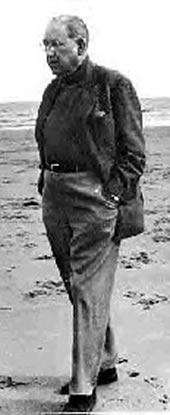
Огден Нэш

Английская поэзия · XX век

Огден Нэш

Ogden Nash

  • 1902 — 1971
  • 5 стихотворений

Содержание

Перевод · оригинал

  1. О ГРЕХАХPortrait of the Artist as a Prematurely Old Man
  2. Very Like a Whale
  3. ПрофессорTHE PURIST
  4. СТАРИКИOLD MEN
  5. КобраTHE COBRA
Как читать

О ГРЕХАХ

Portrait of the Artist as a Prematurely Old Man

Оригинал

It is common knowledge to every schoolboy and even every Bachelor of Arts,

That all sin is divided into two parts. One kind of sin is called a sin of commission, and that is very important,

And it is what you are doing when you are doing some thing you ortant,

And the other kind of sin is just the opposite and is called a sin of omission and is equally bad in the eyes of all right - thinking people, from Billy Sunday to Buddha,

And it consists of not having done something you shuddha.

I might as well give you my opinion of these two kinds of sin as long as, in a way, against each other we are pitting them,

And that is, don't bother your head about sins of commission because however sinful, they must at least be fun or else you wouldn't be committing them.

It is the sin of omission, the second kind of sin,

That lays eggs under your skin.

The way you get really painfully bitten

Is by the insurance you haven't taken out and the checks you haven't added up the stubs of and the appointments you haven't kept and the bills you haven't paid and the letters you haven't written.

Also, about sins of omission there is one particularly painful lack of beauty, Namely, it isn't as though it had been a riotous redletter day or night every time you neglected to do your duty;

You didn't get a wicked forbidden thrill

Every time you let a policy lapse or forgot to pay a bill;

You didn't slap the lads in the tavern on the back and loudly cry Whee,

Let's all fail to write just one more letter before we go home, and this round of unwritten letters is on me.

No, you never get any fun

Out of the things you haven't done,

But they are the things that I do not like to be amid,

Because the suitable things you didn't do give you a lot more trouble than the unsuitable things you did.

The moral is that it is probably better not to sin at all, but if some kind of sin you must be pursuing,

Well, remember to do it by doing rather than by not doing.

Перевод

Это знает каждый школьник или даже бакалавр, Что грехи бывают двух совершенно разных видов. Первый - если ты нарушил, преступил и перебрал. И второй, когда забыл, не услышал, не увидел.

Хочешь знать мое об этом мнение? Тогда наберись терпения.

Не печалься о грехах, совершаемых поступком. Если мы их совершаем, значит знаем для чего. А печалься о грехах, одинаково преступных, Но лишенных даже тени обаяния того.

Ты забыл застраховать жизнь жилище и машину И ли в срок не оплатил воду, газ и телефон. Ты наказан будешь строго, убедительно и сильно. Это будет очень больно для тебя со всех сторон.

И в этом отсутствии всякой души Другие тебе не друзья. Конечно, лучше совсем не грешить. Но если совсем нельзя?

Если надо согрешить По закону строгих чисел, Согреши, но соверши. В этом есть какой-то смысл.

Very Like a Whale

Оригинал

One thing that literature would be greatly the better for Would be a more restricted employment by authors of simile and metaphor. Authors of all races, be they Greeks, Romans, Teutons or Celts, Can't seem just to say that anything is the thing it is but have to go out of their way to say that it is like something else.

What does it mean when we are told

That the Assyrian came down like a wolf on the fold?

In the first place, George Gordon Byron had had enough experience

To know that it probably wasn't just one Assyrian, it was a lot of Assyrians.

However, as too many arguments are apt to induce apoplexy and thus hinder longevity,

We'll let it pass as one Assyrian for the sake of brevity.

Now then, this particular Assyrian, the one whose coorts were gleaming in purple and gold,

Just what does the poet mean when he says he came down like a wolf on the fold?

In heaven and earth more than is dreamed of in our philosophy there are a great many things,

But I don't imagine that among them there is a wolf with purple and gold cohorts or purple and gold anythings.

No, no, Lord Byron, before I'll believe that this Assyrian was actually like a wolf I must have some kind of proof;

Did he run on all fours and did he have a hairy tail and a big red mouth and big white teeth and did he say Woof woof?

Frankly I think it very unlikely, and all you were enitled to say, at the very most,

Was that the Assyrian cohorts came down like a lot of Assyrian cohorts about to destroy the Hebrew host.

But that wasn't fancy enough for Lord Byron, oh dear me no he had to invent a lot of figures of speech and then interpolate them,

With the result that whenever you mention Old Testa ment soldiers to people they say Oh yes, they're the ones that a lot of wolves dressed up in gold and purple ate them.

That's the kind of thing that's being done all the time by poets, from Homer to Tennyson;

They're always comparing ladies to lilies and veal to venison,

And they always say things like that the snow is a white blanket after a winter storm.

Oh it is, is it, all right then, you sleep under a six-inch blanket of snow and I'll sleep under a half-inch blanket of unpoetical blanket material and we'll see which one keeps warm,

And after that maybe you'll begin to comprehend dimly

What I mean by too much metaphor and simile.

Профессор

THE PURIST

Оригинал

I give you now Professor Twist, A conscientious scientist. Trustees exclaimed, "He never bungles!" And sent him off to distant jungles. Camped on a tropic riverside, One day he missed his loving bride. She had, the guide informed him later, Been eaten by an alligator. Professor Twist could not but smile. "You mean," he said, "a crocodile."

Перевод

Педант профессор послан за экватор Его невесту слопал аллигатор В чем видит он теперь свое призвание? Дать хищнику научное название

СТАРИКИ

OLD MEN

Оригинал

People expect old men to die, They do not really mourn old men. Old men are different. People look At them with eyes that wonder when . . . People watch with unshocked eyes; But the old men know when an old man dies.

Перевод

Умирает старик. Умирает старик. Умира... Умирает старик. Молодые дивятся не слишком. Смерть - проблема. Ее не понять философским умишкам. Умирает старик. И ему не дожить до утра.

Старость хуже чем смерть, как отчаянье хуже тоски. Этот тягостный факт понимают одни старики.

Кобра

THE COBRA

Оригинал

This creature fills its mouth with venum And walks upon its duodenum. He who attempts to tease the cobra Is soon a sadder he, and sobra.

Перевод

Она надует щеки ядом И погулять выходит садом. И тот кто с нею спор затеет, Тот очень скоро пропотеет.

Биография

Ogden Nash

1. Где и когда родился? В какой семье?

  • Полное имя: Фредерик Огден Нэш.
  • Дата рождения: 19 августа 1902 года.
  • Место рождения: Rye.
  • Родился в обеспеченной семье.
  • Отец: Edmund Strudwick Nash — работал в компании, производившей импортные товары.
  • Мать: Mattie Cheney Nash.
  • Из-за работы отца семья часто переезжала, поэтому Нэш учился в нескольких школах.
  • В Harvard University не поступал; после школы сразу начал работать.

2. Основные события жизни

  • Работал учителем, затем в издательстве Doubleday.
  • 1931 — выходит первый сборник стихов Hard Lines, мгновенно сделавший его знаменитым.
  • В 1930–1960-х годах регулярно публикуется в журнале The New Yorker.
  • Пишет тексты для театра и мюзиклов.
  • Вместе с Kurt Weill создаёт музыкальную пьесу One Touch of Venus.
  • Выступает с публичными чтениями своих стихов по всей Америке.
  • 19 мая 1971 — умер в Baltimore.

3. Основные произведения

Сборники стихов

  • Hard Lines
  • I'm a Stranger Here Myself
  • Good Intentions
  • The Private Dining Room
  • You Can't Get There from Here

Самые известные стихотворения

  • The Cow
  • The Panther
  • The Turtle
  • Reflections on Ice-Breaking
  • многочисленные короткие юмористические эпиграммы о животных, семье и повседневной жизни

4. Слава при жизни и после смерти

При жизни

  • Был одним из самых популярных юмористических поэтов США.
  • Его книги расходились большими тиражами.
  • Постоянно публиковался в ведущих американских журналах.
  • Его публичные чтения собирали большие аудитории.

После смерти

  • Продолжает оставаться одним из самых цитируемых американских авторов юмористических стихов.
  • Многие его короткие стихотворения входят в школьные антологии.
  • Его афористичные строки регулярно переиздаются и цитируются.

Краткая характеристика

  • Полное имя: Фредерик Огден Нэш.
  • Годы жизни: 1902–1971.
  • Основные жанры: юмористическая поэзия, эпиграммы, детские стихи.
  • Главные темы: повседневная жизнь, семья, животные, человеческие слабости, язык и игра слов.
  • Историческое значение: один из крупнейших американских юмористических поэтов XX века. Прославился необычными рифмами, намеренно нарушал привычные размеры стиха и мастерски использовал каламбуры. Его творчество до сих пор считается образцом лёгкой, остроумной англоязычной поэзии.
↑